


In a world where kids are glued to screens, shape recognition games are a refreshing twist that combines fun and learning. These games not only sharpen a child’s cognitive skills but also make them feel like mini Picassos as they explore the colorful universe of shapes. Who knew that recognizing a triangle could be as thrilling as finding buried treasure?
Overview of Shape Recognition Games
Shape recognition games focus on helping children identify and differentiate various shapes. These games involve activities that enhance visual perception and spatial awareness. Children often find these interactive experiences appealing, as they transform learning into enjoyable challenges.
Educational apps, board games, and online platforms include a variety of shape recognition games. Popular examples feature puzzles where children match shapes to outlines, or digital formats where shapes appear and disappear, requiring quick responses. Engaging with these materials promotes skills such as critical thinking and problem-solving.
Research shows that consistent participation in shape recognition games significantly benefits cognitive development. Children improve their memory and recognition abilities as they practice identifying shapes. Furthermore, these games encourage creativity as children learn to combine shapes into new forms.
Different formats exist for shape recognition games. Flashcards provide a simple way to introduce shapes, while more intricate activities may include scavenger hunts or interactive group games. Each format allows children to explore shapes in varied contexts, enhancing their learning experience.
Parents and educators play a crucial role in facilitating these games. By creating a rich environment filled with shape-related activities, they reinforce the importance of shape recognition. Support from adults promotes motivation, ensuring that children remain engaged and excited about learning.
Shape recognition games serve as a versatile tool for cognitive development, combining fun and learning. With consistent use and adult encouragement, children sharpen their skills while enjoying the process.
Benefits of Shape Recognition Games
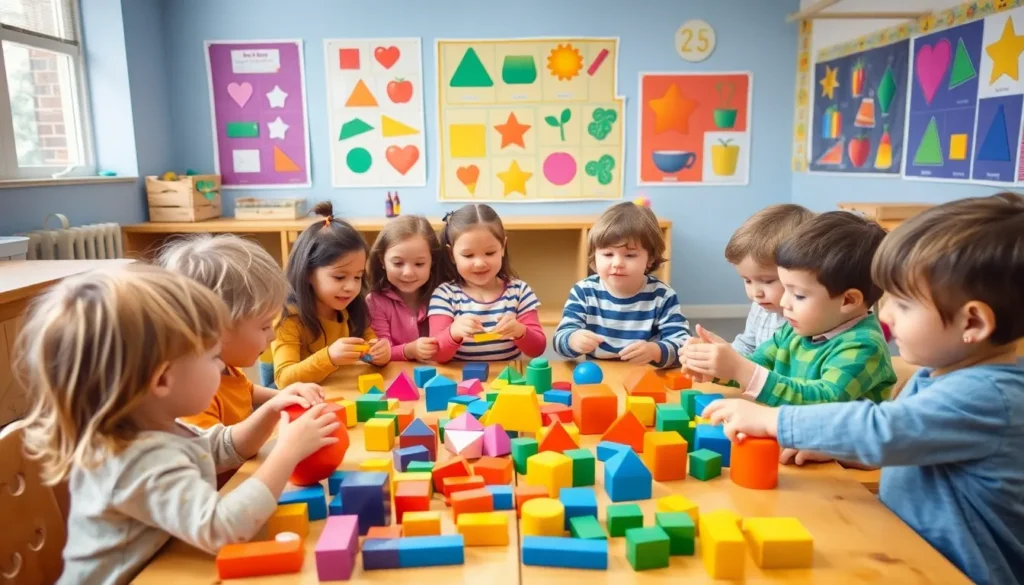
Shape recognition games offer numerous developmental advantages for children. These activities foster essential skills while keeping learning engaging.
Cognitive Development
Cognitive development significantly benefits from shape recognition games. Engaging with various shapes improves children’s visual perception abilities. Critical thinking emerges as kids recognize and categorize different forms. Memory retention increases through repeated exposure to shapes within fun contexts. Children become adept at problem-solving as they tackle puzzles and other interactive tasks. Research shows that consistent play enhances overall cognitive function, supporting advanced skills in subsequent learning stages. These games create a strong foundation for further academic success by stimulating curiosity and exploration.
Motor Skills Enhancement
Motor skills benefit immensely when children participate in shape recognition games. Activities requiring manipulation of shapes help develop fine motor coordination. Grasping, stacking, and aligning shapes refine hand-eye coordination significantly. Interactive elements in games encourage physical movement, promoting gross motor skills as children navigate through scavenger hunts or engage in group activities. Even simple tasks, like fitting shapes into matching slots, enhance dexterity and spatial awareness. Parents and educators can support skill growth through organized gameplay that challenges and excites learners. Overall, these games play a crucial role in preparing children for future tasks requiring precision and control.
Popular Shape Recognition Games
Shape recognition games come in various forms, appealing to children of different ages and learning styles. Engaging with these games can significantly enhance children’s cognitive skills and creativity.
Digital Options
Digital options offer interactive experiences that captivate young learners. Educational apps often include fun activities such as puzzles, shape-matching games, and quick-response challenges. For instance, apps like “Endless Numbers” and “Todo Math” provide adaptive learning experiences that keep kids engaged while developing spatial awareness. These platforms also track progress, allowing parents and educators to monitor developmental advancements easily. Popular sites like ABCmouse and Starfall feature comprehensive shape recognition games tailored for early learners, making digital options a favorite among children.
Traditional Board Games
Traditional board games serve as an excellent way to foster social interaction among young players. Games like “Shape Snatcher” and “The Shape Game” encourage teamwork while enhancing shape identification skills. These classic formats also introduce an element of friendly competition. Flashcards and scavenger hunts can elevate the engagement level, transforming learning into an exciting adventure. By utilizing various materials such as colored shapes and interactive boards, children gain hands-on experience with shapes in a collaborative setting. Traditional games create a rich environment, making learning enjoyable and effective.
Tips for Incorporating Shape Recognition Games
Incorporating shape recognition games into learning routines enhances children’s cognitive skills while keeping their engagement levels high. These strategies ensure effective integration into everyday activities.
Age-Appropriate Choices
Select shape recognition games designed for specific age groups. Games tailored for toddlers focus on simple shapes like circles and squares. Preschoolers benefit from enhanced games featuring more complex shapes, encouraging identification and differentiation. Ensure the chosen games align with developmental stages; engaging older children may require puzzles or digital apps that incorporate critical thinking tasks. Cater to varying learning styles with diverse game formats; visual learners thrive with interactive activities, while kinesthetic learners benefit from hands-on games. This thoughtful selection maximizes learning potential and sustains interest.
Creating a Fun Learning Environment
Foster a playful atmosphere to enhance the learning experience. Integrating shape recognition games into everyday activities makes learning seamless and enjoyable. Set up scavenger hunts around the home or classroom; this encourages exploration and discovery. Use colorful flashcards to prompt excitement during game time. Include rewards and praise for achievement; this reinforces positive reinforcement and motivation. Collaborate with peers or family members during group activities, promoting teamwork and social interaction. A vibrant environment allows children to associate learning with joy, making it a memorable experience.
Shape recognition games offer a dynamic way to enhance children’s cognitive and motor skills. By blending fun with education, these games spark creativity and critical thinking. They provide varied formats that cater to different learning styles, making every interaction an adventure.
Parents and educators play a vital role in this process, guiding children through engaging experiences that foster a love for learning. By incorporating these games into daily routines, they can create an environment where children thrive, developing essential skills while enjoying the journey. Embracing shape recognition games is a step toward nurturing well-rounded, curious learners ready for future challenges.