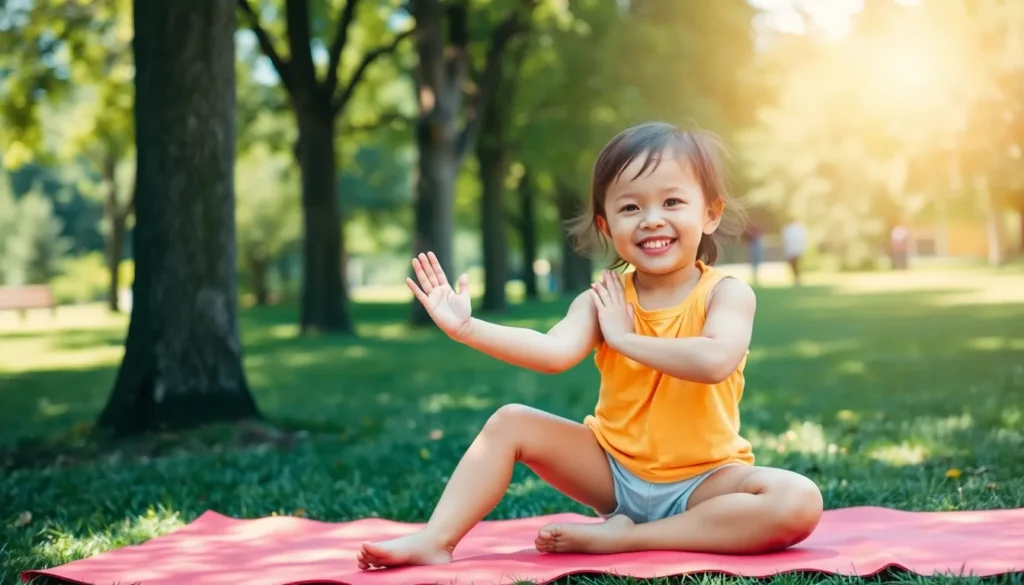

In a world where kids are glued to screens and bouncing off walls, kids yoga emerges as a superhero in stretchy pants. Imagine a place where little ones can twist like pretzels, breathe like they just spotted a puppy, and find their inner calm—all while giggling like they just heard the best knock-knock joke.
Kids yoga isn’t just about striking poses; it’s a magical blend of fun and focus. It helps children build strength, flexibility, and mindfulness, all while making new friends and exploring their imaginations. So why not roll out the mat and let the adventure begin? With every downward dog and happy baby pose, kids aren’t just exercising—they’re discovering the incredible power of their own bodies and minds.
Benefits of Kids Yoga
Kids yoga offers various advantages for overall health and well-being, focusing on physical, mental, and emotional growth.
Physical Benefits
Kids yoga enhances flexibility through engaging postures that promote stretching. Strength develops as children support their body weight in various poses. Improved balance occurs as they master stances like the tree or warrior. Coordination also receives a boost with the combination of movements and breathing techniques. Injuries reduce as practice strengthens muscles and improves awareness of body mechanics.
Mental Benefits
Kids yoga fosters concentration by encouraging children to focus on their breath and movements. Enhanced memory capabilities arise from practicing sequences and remembering poses. Increased creativity develops as kids explore imaginative themes during classes. Improved problem-solving skills come from learning how to approach physical challenges on the mat. Clarity in thought emerges as children experience mindfulness that helps calm racing thoughts.
Emotional Benefits
Self-esteem receives a significant boost as children achieve new poses and overcome challenges. Kids build resilience by learning to navigate difficulties in a supportive environment. Emotional regulation improves as mindfulness practices help them understand feelings. Stress relief occurs through calming techniques that provide tranquility. Strengthened social connections develop as children participate in group classes, supporting each other in their yoga journeys.
Popular Kids Yoga Styles

Kids yoga features various styles that cater to different needs and preferences. Each style promotes unique benefits while making yoga enjoyable for children.
Hatha Yoga
Hatha yoga focuses on basic postures and breath control. This gentle style introduces children to the fundamentals of yoga, emphasizing relaxation and alignment. Poses like Downward Dog and Child’s Pose enhance flexibility and cultivate body awareness. Encouragement to connect with breath promotes mindfulness. Kids often find comfort in the slower pace, which helps reduce anxiety. Engaging in Hatha yoga can boost physical strength while fostering a sense of calm.
Vinyasa Yoga
Vinyasa yoga offers a dynamic approach, linking breath and movement through flowing sequences. This style captivates children’s interest due to its energetic nature. As kids learn to transition smoothly from one pose to another, they develop coordination and balance. Popular poses include Warrior and Tree, which challenge strength and concentration. Vinyasa practice often incorporates music, amplifying enthusiasm and creativity. Children experience an invigorating workout while learning mindfulness through active engagement.
Kundalini Yoga
Kundalini yoga emphasizes awakening the energy within through specific kriyas. This style combines postures, chanting, and meditation, promoting emotional expression and spiritual well-being. Children engage in fun activities like singing and dancing, making practice lively and enjoyable. Breathwork and relaxation techniques enhance self-regulation and focus. By exploring concepts like inner energy, kids gain a deeper understanding of themselves. Kundalini yoga nurtures creativity and emotional intelligence, fostering a supportive environment for personal growth.
How to Get Started with Kids Yoga
Starting kids yoga involves selecting the right class and gathering essential gear. These steps ensure a positive and enjoyable experience for children.
Choosing the Right Class
Selecting an appropriate class is crucial for success. Look for classes that focus on fun and engagement while promoting basic yoga principles. Consider the child’s age and experience level when evaluating options. Some studios offer specialized programs tailored to different age groups, such as toddlers or pre-teens. Check the instructor’s qualifications and teaching style, ensuring they create a welcoming atmosphere. Involving children in the decision-making process can enhance their excitement and willingness to participate. Research online reviews or ask for recommendations from other parents to find reputed facilities nearby.
Essential Gear and Props
Gathering essential gear enhances the children’s yoga experience. Comfortable clothing allows for freedom of movement, so opt for breathable fabrics that aren’t restrictive. A non-slip yoga mat provides stability during poses, ensuring safety and comfort. It’s beneficial to use props like blocks and straps to support children in mastering challenging poses, promoting proper alignment and confidence. Encourage kids to personalize their mats with stickers or colors, making it an inviting space for them. Emphasizing fun in every aspect encourages the child to develop a positive association with yoga practice.
Tips for Practicing Kids Yoga at Home
Creating a conducive environment for kids yoga enhances the practice experience. Choose a quiet space free from distractions, allowing for more focus. Incorporate colorful mats and playful props, which can make the session visually appealing.
Incorporating fun themes engages children’s imaginations. Pose a challenge, like transforming into their favorite animals during practice. Encourage participation by inviting siblings or parents to join, fostering a shared experience and building bonds.
Setting a consistent schedule helps establish routine. Designate specific times each week for yoga practice, making it easier for kids to develop the habit. Keeping sessions short and fun maintains their interest. Aim for 15 to 30-minute sessions that mix play with poses.
Using apps or online videos provides guidance and variety. Many resources offer kid-friendly instructions and colorful visuals. Selecting different videos each week keeps the sessions fresh and exciting.
Incorporating relaxation techniques cultivates mindfulness. Introduce breathing exercises, focusing on deep inhalations and exhalations. Encourage kids to imagine a peaceful place while relaxing at the end of the session.
Celebrating achievements promotes motivation. After each session, recognize any milestones, whether mastering a pose or increasing focus. This positive reinforcement boosts self-esteem and encourages continued practice.
Practicing yoga together fosters a sense of community. Sharing experiences and discussing feelings after sessions enhances emotional connections. Offering playful feedback or gentle corrections encourages growth and support in their practice.
Kids yoga offers a unique blend of physical activity and mental enrichment that supports children’s holistic development. By engaging in this playful practice, children not only improve their strength and flexibility but also enhance their emotional and social skills.
The various styles of kids yoga cater to diverse interests, making it accessible and enjoyable for everyone. Whether through structured classes or home practice, the emphasis on fun ensures that children develop a lasting love for yoga.
Encouraging mindfulness and creativity in a supportive environment helps foster resilience and self-esteem. As kids continue their yoga journey, they’ll likely carry these valuable skills into other areas of their lives, enriching their overall well-being.