


Navigating the world of toddler meals can feel like a culinary circus act. One moment, they’re devouring broccoli like it’s candy, and the next, they’re turning their noses up at the very same green trees. Parents often find themselves in a food battle, armed with spoons and a sprinkle of creativity.
Nutritional Needs of Toddlers
Understanding the nutritional needs of toddlers is essential for their growth and development. Proper nutrition fuels their energy levels and contributes to overall health.
Essential Nutrients
Toddlers require a variety of essential nutrients for optimal growth. Protein supports muscle development and immune function. Iron fuels cognitive development, while calcium and vitamin D strengthen bones. Healthy fats, like omega-3s, promote brain health. Fruits and vegetables provide vitamins, minerals, and fiber. Whole grains, such as oats and brown rice, add additional energy through complex carbohydrates. Balancing meals with these nutrients ensures toddlers receive the necessary components for healthy development.
Recommended Serving Sizes
Serving sizes for toddlers differ from those of older children and adults. A typical serving size for fruits and vegetables is about one-quarter to one-half cup. For grains, one ounce or a small slice of bread suffices. Protein sources, such as meat or beans, should total about one ounce. Dairy options like yogurt or milk equate to three-quarters of a cup. Parents can adjust these servings based on individual appetite and growth spurts. Awareness of portion sizes helps prevent overfeeding or underfeeding, fostering healthy eating habits.
Types of Toddler Meals
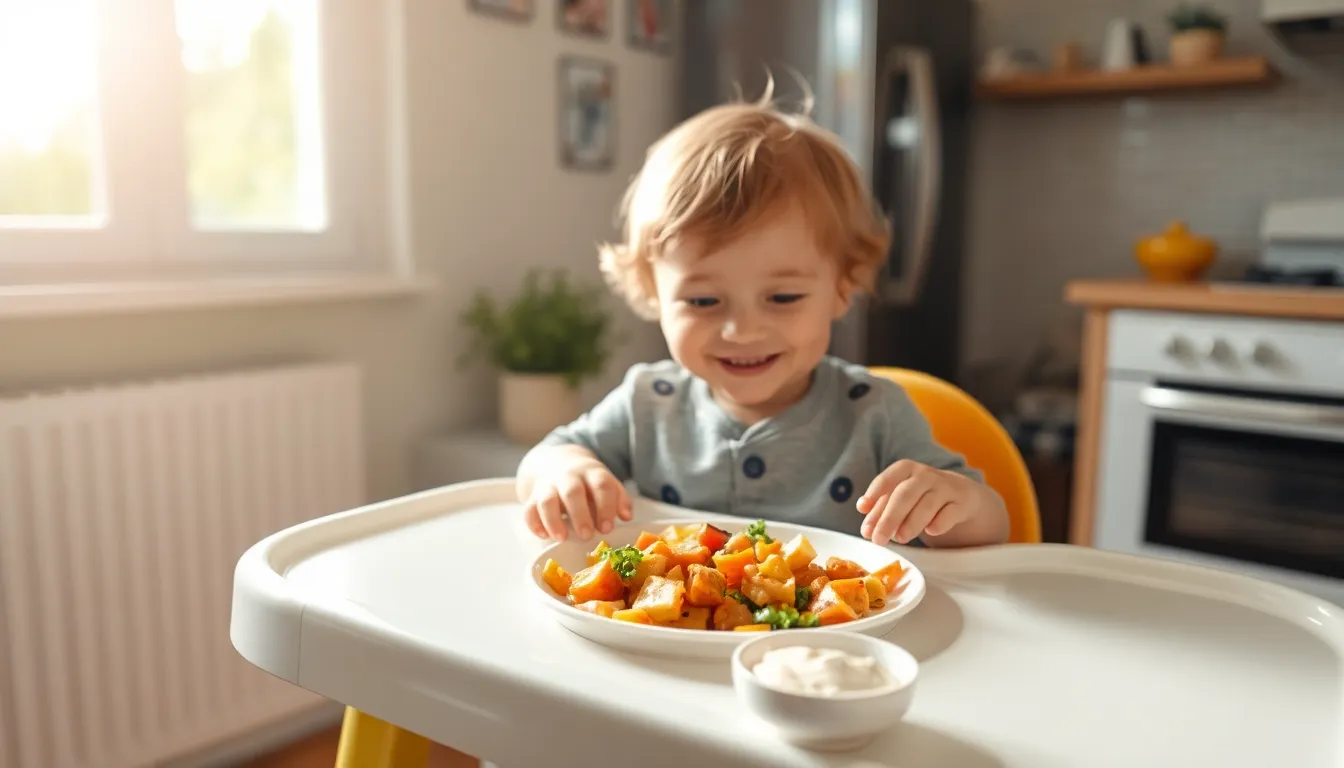
Toddler meals can be categorized into homemade options and store-bought choices. Each type offers distinct advantages for parents navigating the feeding journey.
Homemade Meals
Creating homemade meals allows parents to control ingredients and flavors. Ingredients like whole grains, lean proteins, and vibrant fruits can enhance nutritional value. Cooking simple dishes such as vegetable stir-fry or baked chicken provides variety and ensures quality. Small portions help toddlers manage their servings effectively. Foods like quinoa or sweet potatoes deliver essential nutrients while appealing to young palettes. Mixing textures, such as smooth purees and soft chunks, can keep meals interesting. Offering dips, such as hummus or yogurt, encourages toddlers to explore flavors.
Store-Bought Options
Store-bought options provide convenience for busy parents. Many brands specialize in toddler-friendly meals, ensuring balanced nutrition. Products like pouches filled with fruits and vegetables or frozen meal kits can save time. Reading labels confirms that these options are free from artificial additives. Some snacks, like yogurt tubes or whole grain crackers, offer healthy choices when on the go. Parents can also find options that cater to specific dietary needs, including gluten-free or dairy-free meals. These alternatives make it easier to introduce new foods while maintaining variety in a toddler’s diet.
Tips for Preparing Toddler Meals
Preparing meals for toddlers requires creativity and efficiency. By focusing on simple, nutritious options, parents can make mealtime enjoyable for everyone.
Quick and Easy Recipes
Utilizing ingredients like whole grains and lean proteins makes meal prep straightforward. Easy recipes include vegetable omelets, where eggs and assorted vegetables blend seamlessly for a nutritious breakfast. Another option features whole grain pasta mixed with tomato sauce and vegetables for a quick lunch. Smoothies using fruits and yogurt can provide a delightful snack, ensuring toddlers get their vitamins. Preparing meals in bulk also saves time, allowing for instant access to healthy options on busy days. Emphasizing variety keeps toddlers engaged and excited about mealtime.
Introducing New Foods
Introducing new foods can be a rewarding experience. Start by blending new flavors with familiar favorites; for example, add spinach to a cheese quesadilla. Gradually incorporate seasonal fruits and vegetables to spark interest in different textures and tastes. Hosting a weekly “taste test” encourages toddlers to explore various foods without pressure. Engage toddlers in the preparation process; letting them help in the kitchen often increases their curiosity. Encourage patience, as toddlers may require multiple exposures to accept new foods. Providing a safe space for food exploration builds positive associations around eating.
Common Challenges
Feeding toddlers presents several challenges. Parents often encounter picky eaters, which can make meals frustrating and unpredictable.
Picky Eaters
Picky eaters present significant obstacles during mealtime. Toddlers might show strong preferences, suddenly refusing foods they once enjoyed. Frequent exposure to various flavors helps broaden their palate, and presenting foods in fun ways can spark curiosity. Creative meal ideas, like using colorful fruits and vegetables, encourage enthusiasm for trying new options. Consistency matters as well; regular mealtime routines normalize healthy eating. Offering praise for trying new foods reinforces positive behaviors. Despite ongoing challenges, patience and persistence enable parents to navigate the picky eater phase effectively.
Meal Timing and Schedules
Establishing meal timing and schedules often proves difficult for parents. Toddlers thrive on routine but may resist eating at set meal times. Flexible yet structured schedules support a balance between hunger and mealtimes. Frequent small meals compliment a toddler’s natural eating patterns. Snacks should incorporate nutritious foods between meals to maintain energy and reduce hunger-induced meltdowns. Regularly serving meals at consistent times builds predictability. Coordinating family meals also fosters social interaction and positive eating habits. Attention to these dynamics can simplify feeding challenges and promote a healthier relationship with food.
Feeding toddlers can be a challenging yet rewarding journey for parents. By understanding their nutritional needs and preferences, caregivers can create a balanced diet that supports growth and development. Whether opting for homemade meals or convenient store-bought options, the focus should remain on providing variety and exposure to different flavors.
Involving toddlers in meal preparation and establishing consistent routines can foster positive eating habits. Patience and creativity are essential tools in this process. Ultimately, nurturing a healthy relationship with food lays the foundation for lifelong eating habits, making mealtime an enjoyable experience for both parents and toddlers.